
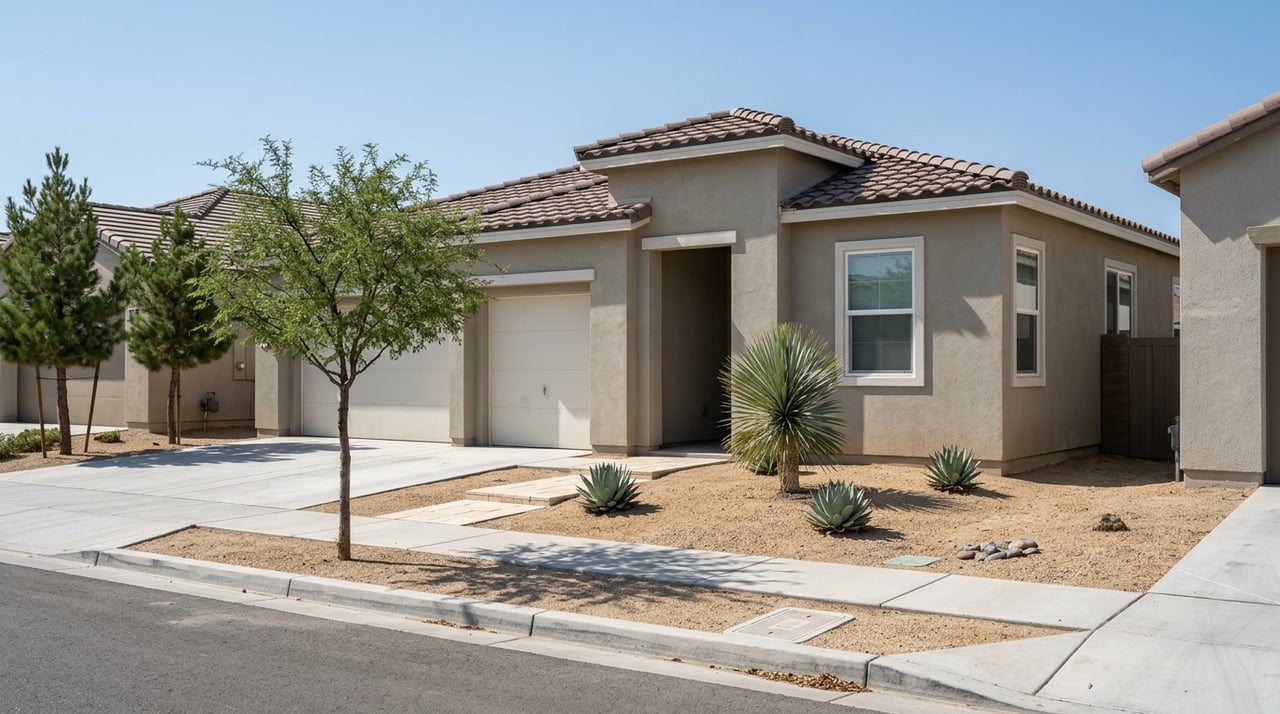
Master-planned living sounds simple, but in Centennial Hills, it means more than living in a neighborhood with an entrance sign or shared amenities. You may be looking for walkable parks, organized streets, and a home that feels part of a larger vision. You may also be wondering how HOAs, dues, and design rules fit into the picture. This guide will help you understand how master-planned living works in Centennial Hills, what shapes daily life there, and what to review before you buy. Let’s dive in.
What master-planned living means
In Centennial Hills, “master-planned” usually refers to a broader master plan area, not just one subdivision. City planning documents show a mix of land uses that include Planned Community Development, Town Center, Parks/Recreation/Open Space, Public Facilities, residential uses, and mixed-use designations.
That matters because the area was designed with a bigger framework in mind. The original Centennial Hills Sector Plan aimed to focus commercial and office activity near the Beltway and US 95 interchange while buffering residential neighborhoods from heavier traffic and spillover impacts.
In practical terms, master-planned living here is shaped by more than one HOA rulebook. It is also influenced by city planning for circulation, landscaping, buffering, streetscapes, and trail connections between homes, recreation, and commercial areas.
How planning shapes daily life
One of the biggest benefits of a master-planned area is predictability. The Centennial Hills Sector Plan called for design review, landscape and wall buffer standards, a streetscape program, and a connected trail system.
For you as a buyer, that can translate into a more consistent neighborhood feel. Streets, open spaces, and transitions between residential and commercial areas are meant to work together rather than grow in a patchwork way.
That said, your experience can still vary by subdivision. Some features that feel like part of the community are public amenities, while others are managed by one or more homeowner associations.
Centennial Hills amenities to know
Centennial Hills has several public amenities that support the master-planned lifestyle. These amenities help create the sense that daily needs, recreation, and community spaces are close at hand.
Centennial Hills Park
Centennial Hills Park is a 120-acre regional park and one of the area’s biggest lifestyle anchors. It includes an all-abilities playground, dog park, pickleball courts, soccer fields, water play areas, a jogging and walking path, reservable picnic areas, open space, and an amphitheatre with grass seating for more than 3,000 people.
This is more than a small neighborhood park. Its size and programming give many residents access to recreation that supports an active, outdoors-oriented routine.
Centennial Hills Library
The Centennial Hills Library adds another everyday convenience. It opened in January 2009, spans 45,555 square feet, is LEED Gold certified, sits on a seven-acre site, and includes nearly 110,000 volumes plus a Homework Help and Homeschool Center.
For many buyers, nearby public resources matter just as much as private amenities. A library of this size and scope can become part of your weekly routine, especially if you value access to study, reading, and community programming.
Centennial Hills Center
The nearby Centennial Hills Center expands the area’s amenity mix. It offers classes and activities for adults 50+, a fitness and weight room, an indoor lap pool, a computer lab, and a library.
Together, the park, library, and center help explain why Centennial Hills often feels planned beyond the boundaries of any one subdivision. Public amenities play a major role in the lifestyle buyers experience here.
Public amenities versus HOA amenities
This distinction is important when you tour homes in Centennial Hills. Some of the area’s appeal comes from public parks, libraries, trails, and recreation facilities, while other benefits may come from HOA-managed landscaping, gates, common areas, or neighborhood amenities.
In other words, not every attractive feature is funded the same way. A home may feel connected to a larger community experience even if certain amenities are not included in your HOA dues.
That is one reason it helps to look beyond marketing language. You want to know what is public, what is private, and what your monthly fees actually cover.
How HOA layers can work
In Nevada, a common-interest community involves shared obligations for common expenses tied to common elements, services, insurance, maintenance, or taxes. Nevada also recognizes master associations, which means some homes in a master-planned area may be part of more than one layer of governance.
For example, you might have a master HOA that handles broader shared assets and a sub-association that manages your specific neighborhood or tract. That can affect both your total dues and the rules you are expected to follow.
This layered setup is one of the most important things to understand before you buy. A home can belong to a beautifully maintained area, but the details of maintenance, approvals, and fees may be split across multiple associations.
Why design rules matter
Master-planned living often comes with visual consistency, and that usually means design oversight. Centennial Hills planning documents called for design standards that buffer residential areas, encourage pedestrian-friendly streetscapes, and support an overall neighborhood character.
In day-to-day life, that may mean exterior changes are reviewed before approval. Buyers should expect that things like landscaping, paint, fences, roofs, or other visible changes may be regulated through governing documents and architectural review processes.
Nevada law also shows how state rules and HOA authority interact. Homeowners may install drought-tolerant landscaping, but plans still must be submitted for architectural review and approval, and the association may not unreasonably deny that request.
What sellers must provide in Nevada
If you are buying a home in a common-interest community, Nevada resale rules give you important information to review. Sellers are required to furnish a resale package with key documents about the HOA.
That package includes the declaration, bylaws, rules or regulations, the amount of monthly assessments, any unpaid obligations, the current operating budget, year-to-date financial statements, and reserve information. Nevada law also gives the purchaser a short cancellation right after receiving the resale package.
This is one of the most useful protections for buyers in HOA communities. It gives you a clearer picture of how the association operates before you move forward.
Current market context in Centennial Hills
Centennial Hills remains an active housing market in 2026. Zillow reports an average home value of $449,995 as of June 30, 2026, with homes going pending in around 30 days.
Redfin reports a median sale price of $484,837 over the prior three months and a median of 49 days on market. These are area-wide numbers, not a separate pricing estimate for master-planned homes alone, but they do help show ongoing buyer demand.
For you, that means community structure is only part of the decision. You are also buying into a broader market where timing, pricing, dues, and condition all matter.
Value and trade-offs to weigh
Many buyers are drawn to master-planned living because it can offer organized streetscapes, nearby amenities, and a more cohesive neighborhood environment. Research suggests HOA or master-planned membership can support home values, but the effect is not guaranteed and can vary by management quality, dues, restrictions, and local market conditions.
That is why it helps to think in terms of trade-offs rather than assumptions. The upside may include better-maintained common areas, stronger visual consistency, and access to amenities. The trade-off may include monthly dues, approval processes, and added rules.
Neither side is automatically right for every buyer. The key is finding a community structure that matches how you want to live.
Questions to ask before you buy
When you tour homes in Centennial Hills, a few questions can help you compare options more clearly:
- Is the home part of a master HOA, a sub-association, or both?
- What do the monthly dues cover?
- Which exterior changes require prior approval?
- What do the budget, reserve summary, and financial statements show?
- Are there any unpaid obligations or special assessments?
- Are there parking, rental, or use restrictions that could affect your plans?
These questions can help you look past curb appeal and understand the full picture. In a master-planned area, the neighborhood structure is part of the property decision.
How to make a smarter move
If you are comparing homes in Centennial Hills, it helps to review each property on two levels. First, look at the home itself, including layout, condition, and price. Then look at the community structure, including dues, governance, design rules, and access to amenities.
That second layer often shapes your daily experience just as much as square footage or finishes. A well-matched community can support the lifestyle you want. A mismatch can create frustration after closing.
With the right guidance, you can separate public amenities from HOA benefits, understand what the governing documents actually say, and make a confident decision based on how you plan to live.
If you want help comparing neighborhoods, HOA structures, and homes in Centennial Hills, Stacy Peppley is here to guide you home with heart and expertise.
FAQs
What does master-planned living in Centennial Hills mean?
- In Centennial Hills, master-planned living usually means living in a broader planned area shaped by city land-use planning, streetscape standards, buffers, trails, public amenities, and in some cases layered HOA governance.
What public amenities are available in Centennial Hills?
- Centennial Hills includes major public amenities such as the 120-acre Centennial Hills Park, the Centennial Hills Library, and the Centennial Hills Center with recreation, fitness, and community programming.
What is the difference between a master HOA and a sub-association in Nevada?
- A master HOA typically covers shared assets or broader community elements, while a sub-association manages a specific neighborhood or tract, and some homes may belong to both.
What HOA documents should buyers review for a Centennial Hills home?
- Buyers should review the resale package, which includes the declaration, bylaws, rules or regulations, monthly assessments, unpaid obligations, the operating budget, year-to-date financial statements, and reserve information.
Are exterior changes restricted in Centennial Hills HOA communities?
- Many communities may require approval for exterior changes such as landscaping, paint, fences, roofs, or other visible updates, so it is important to review the governing documents for the specific home you are considering.
What is the current housing market like in Centennial Hills?
- As of 2026 data cited here, Centennial Hills had an average home value of $449,995 according to Zillow, with homes going pending in around 30 days, while Redfin reported a median sale price of $484,837 and a median of 49 days on market.
What should buyers compare besides the house itself in Centennial Hills?
- Buyers should compare HOA dues, what those dues cover, reserve strength, budget health, design restrictions, and whether the home is governed by one association or multiple layers of association management.