
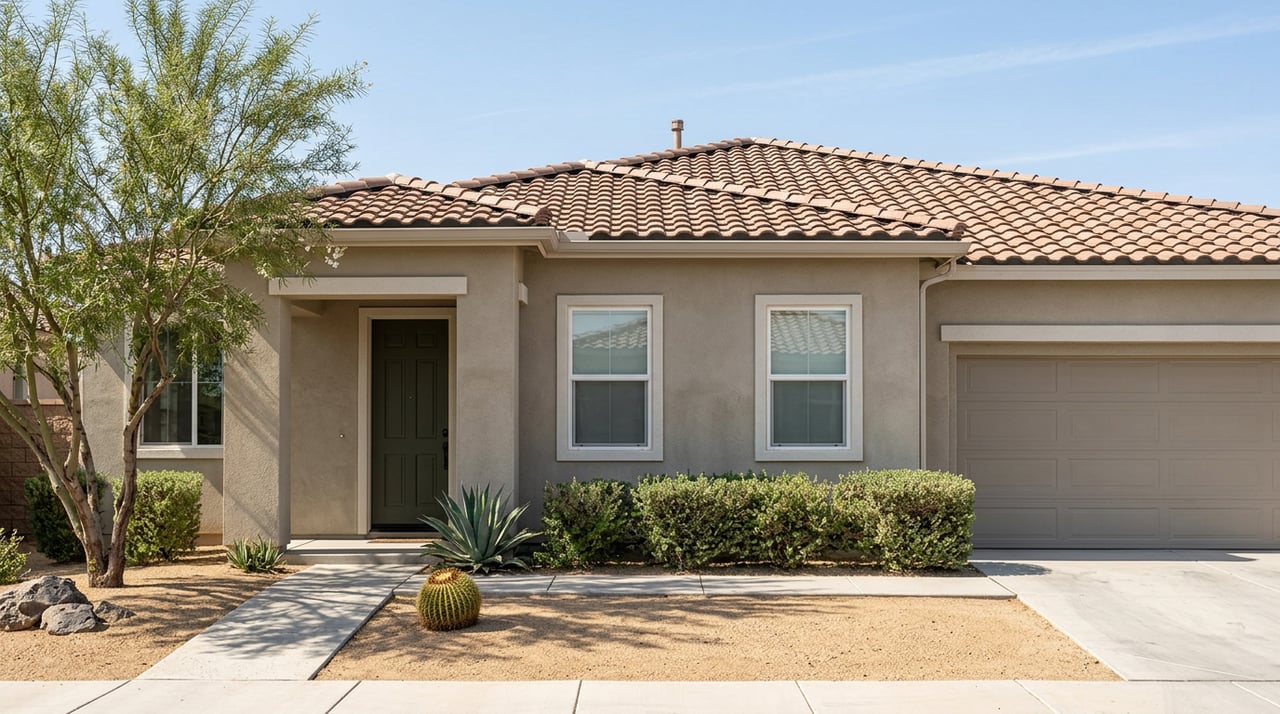
A buyer under contract on a home in Aliante calls their inspector and asks for a sewer scope. Two miles away, a buyer under contract on a pre-1990 resale near Craig Ranch skips the sewer scope entirely and focuses their inspection budget on cosmetic items. Both buyers just made the wrong call, and neither will find out until the wrong system fails.
North Las Vegas has grown in two distinct waves, and the line between them runs straight through the middle of the city's housing stock. One side is an older resale grid built mostly in the 1980s, 90s, and early 2000s. The other is a newer master-planned corridor, largely built after 2015, anchored by communities like Aliante and Valley Vista. The homes look different, age differently, and fail differently. A buyer or seller who treats every North Las Vegas inspection the same way is either wasting money chasing problems that don't exist yet or missing the leverage sitting in plain sight.
The Line Running Through the City
The older grid is where original systems are aging out. HVAC units, cast-iron and clay sewer laterals, and stucco exteriors from the mid-90s to mid-2000s building boom are all reaching the point where desert wear starts showing up on an inspection report rather than in a homeowner's utility bill.
The newer corridor is a different animal. Homes in Aliante and Valley Vista are largely post-2015 construction, which means the systems inside them are still young. The risk there isn't age. It's execution. Builder-grade installs, pre-drywall workmanship, and whether the warranty period was used correctly before it expired matter more than anything mechanical.
Matching the inspection to the decade the home was built, rather than treating "North Las Vegas" as one uniform market, is the single highest-leverage move a buyer or seller can make before anyone climbs on a roof.
What Each Side Actually Needs
| Older Resale Grid (roughly 1980s–2000s) | Newer Corridor (post-2015: Aliante, Valley Vista) | |
|---|---|---|
| Primary risk | Aging major systems | Construction execution |
| HVAC | Budget for replacement once the unit passes 12–13 years | Check warranty status and verify install quality |
| Sewer line | Cast-iron or clay laterals warrant a mandatory camera scope | Modern PVC lines, scope generally unnecessary |
| Exterior | EIFS stucco wear common on 1995–2005 stock | Pre-drywall and final walk-through defects are the concern |
| Pool equipment | Pump wear after years of long summer run cycles | Rarely a factor unless the home came with a pool at build |
| Negotiation lever | Seller credit for systems near end of useful life | Builder punch list and warranty claim, not a resale credit |
The practical version of this table: a buyer looking at a home built in 1988 should mandate the sewer scope and go in assuming they'll need to budget for HVAC replacement within a couple of years. A buyer looking at a 2018 home in a community without a pool can skip the pool and sewer add-ons entirely and put that inspection money toward a general inspection and slab leak detection instead.
What Guessing Wrong Actually Costs
The numbers make the split concrete. Las Vegas HVAC systems run on a 12 to 14 year lifespan rather than the 18 to 22 years quoted in national inspection literature, and once a unit passes 15 years, it almost always needs replacement within a buyer's first two years of ownership. Across 318 local inspections tracked in the first quarter of 2026, the systems flagged as end-of-life averaged 13.4 years old, right in that danger window.
That age threshold turns into real money at the negotiating table. Across 87 HVAC-related inspection responses from the same period, the average seller-funded credit landed at $9,400, and 73 percent of sellers chose to fund that credit rather than complete a replacement before closing. On the exterior side, stucco EIFS damage on homes built between 1995 and 2005 typically runs $4,500 to $18,000 to remediate once it's caught at inspection. Cast-iron sewer lines on pre-1990s homes carry a similar range, $4,800 to $18,000, when root intrusion or corrosion shows up on the scope.
Slab leaks are the sneakiest item on the list. Detection costs only $200 to $400, but it catches repairs in the $4,500 to $11,000 range that generalist inspectors miss roughly 70 percent of the time without the add-on. None of this shows up if a buyer aims their inspection dollars at the wrong decade of construction.
The systems flagged as "end of useful life" in Q1 2026 averaged 13.4 years old, almost exactly at the point where Las Vegas HVAC units stop being a maintenance item and start being a negotiation item.
Zooming out, Greater Las Vegas Realtors data from the same quarter shows 78 percent of seller-funded credit negotiations averaging $4,600 in concession value, with 22 percent of those triggered specifically by inspection findings. That's real leverage, but only for buyers who inspected the right things in the first place.
The Ten-Day Clock Both Sides Share
Whichever side of the construction line a home sits on, Nevada law puts the same clock on the seller. According to Study.com, the Seller's Real Property Disclosure Form must reach the buyer no less than ten days before closing. If it arrives late, the buyer can retract their offer without penalty. That form covers known conditions the seller is aware of, not the results of a professional inspection, which is exactly why buyers rely on both.
There's a limit worth knowing on both sides. Nevada law doesn't require sellers to inspect "generally inaccessible areas" like the foundation or the roof themselves, and HouseMaster explains that licensed home inspectors in Nevada are restricted to visual, non-invasive review. They can't open walls or test locked systems. That's exactly why the sewer scope and slab leak detection exist as paid add-ons in the older grid. The standard inspection was never designed to see what's underground.
Matching the Checklist to the Address
None of this requires guesswork. Before booking an inspector, a buyer or seller in North Las Vegas can generally sort themselves with one question: was this home built before or after roughly 2015? If before, the priority list is HVAC age, sewer material, and stucco condition. If after, particularly in Aliante or Valley Vista, the priority list is builder-warranty status and construction quality rather than system age.
Sellers benefit from the same clarity. Knowing which items are likely to surface on an older home means pricing and disclosure decisions can get made before a buyer's inspector finds them first. Buyers benefit because inspection dollars spent on the right items turn into real negotiating room, not just a report full of findings nobody acts on.
A Few Questions Before You Book an Inspector
Does every home in North Las Vegas need a sewer scope? No. It's a priority on pre-1990s homes with cast-iron or clay laterals, but largely unnecessary on post-2015 construction with modern PVC lines.
Whether you're weighing a 1990s resale near the older grid or a newer build in Aliante or Valley Vista, the checklist that protects you is the one built for that specific home, not a generic version of North Las Vegas. Stacy Peppley has spent more than two decades guiding buyers and sellers through exactly this kind of decision across Southern Nevada. If you're getting ready to buy or sell in North Las Vegas and want a walkthrough of what to expect from your specific address, let's connect.
This article is general information, not legal, tax or financial advice. Consult a qualified professional about your situation.