
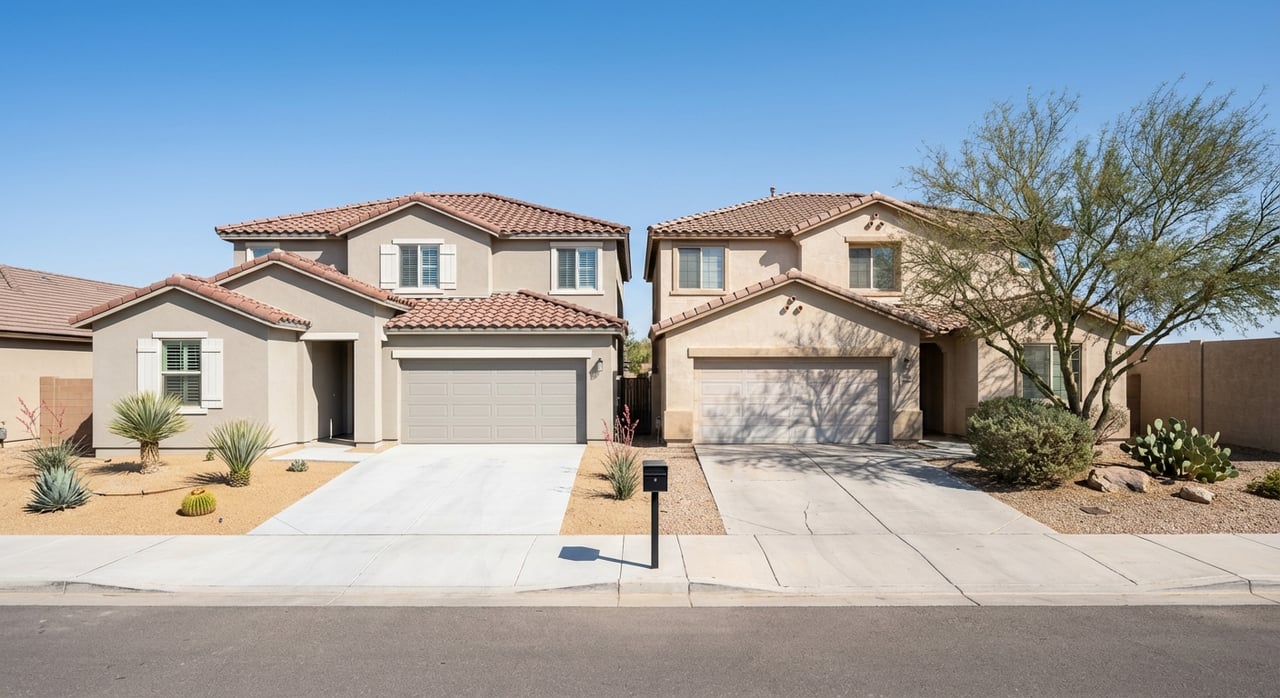
Torn between the sparkle of a brand‑new home and the charm of a move‑in‑ready resale in Centennial Hills? You’re not alone. Choosing the right path comes down to cost, timing, customization, and how much maintenance you want to take on. In this guide, you’ll get clear, local insights to help you compare options, avoid surprises, and make a confident decision. Let’s dive in.
Centennial Hills market snapshot
Centennial Hills is one of northwest Las Vegas’s most active areas for both new construction and resale homes. Recent data ranges by source and date: the Zillow Home Value Index placed the typical Centennial Hills home value around $444,531 as of January 31, 2026, while Realtor.com reported a median listing price near $519,000 in December 2025. Differences often come from whether the metric uses list vs sold prices, what area boundaries are used, and the reporting period.
For broader context, the U.S. median price for new single‑family homes in mid‑2025 hovered around national levels that can flip relative to existing homes over time. You can see the national new‑home trend on the Federal Reserve’s series for new single‑family home prices at the FRED database. Local results vary by neighborhood, product type, and upgrades, so use current comps and builder price lists for precise planning.
New construction: what to expect
Where to find new homes
In and around Centennial Hills, the largest concentration of new builds sits in and near the master‑planned community of Skye Canyon. Sections of Providence also have newer phases. Skye Canyon highlights community parks, fitness amenities, trails, and convenient access to US‑95, which supports commutes across the valley.
Builders and product mix
You’ll see national builders offering a range from entry/mid‑level to luxury move‑up product. Examples include Toll Brothers communities at Skye Canyon and Lennar neighborhoods that often bundle popular finishes through programs like Everything’s Included, highlighted in Lennar’s Belterra at Skye Canyon feature. Pricing typically starts in the low‑to‑mid $400,000s for base product and can rise into the $500,000s–$700,000s and higher for larger homes and premium lots. Build times on a selected lot often run 6–12 months, while quick‑move inventory homes may close in 30–90 days.
New‑home benefits
- Modern floorplans and energy‑efficient systems that meet newer codes.
- Lower near‑term maintenance for roofs, HVAC, water heaters, and mechanicals.
- Smart‑home features and contemporary finishes.
- Builder warranties that clearly define coverage for workmanship, systems, and structural items.
New‑home tradeoffs
- Premiums for brand‑new finishes, lot selection, and customizations.
- Longer timelines if you build from the ground up.
- Early‑phase neighborhoods may still be adding retail, services, and infrastructure.
- Verify how property taxes will be assessed in the first year. New construction may not receive Nevada’s 3% primary‑residence tax cap until the following fiscal year; see the county’s overview of the abatement rules on the Clark County tax abatement page.
Warranties that matter
Most insured builder warranties follow a “1‑2‑10” structure: one year on workmanship, two years on distribution systems like plumbing and electrical, and ten years on qualifying structural defects. Review the actual contract, ask whether coverage is insurer‑backed, and confirm transferability. For an overview of industry standards, visit 2‑10 Home Buyers Warranty’s resource.
Resale homes: what to expect
Why buyers choose resale
- Often a lower entry price than comparable new builds, depending on timing.
- Established landscaping and streetscapes.
- Immediate occupancy with known utility and operational history.
- Mature micro‑locations close to existing retail and services.
Costs to plan for
Resale homes, especially those built in the mid‑2000s, may need near‑term replacements. Budget for items like roofs, HVAC units, water heaters, and appliances in your 3–5 year cost comparison. National buyer guides suggest planning for $5,000 to $20,000 or more in maintenance or updates depending on age and condition. A full home inspection plus targeted add‑ons like a sewer scope and HVAC evaluation are smart moves. For a helpful cost‑comparison primer, see this overview of building vs buying cost considerations.
Negotiation dynamics
When inventory rises and days on market lengthen, resale buyers can find more room to negotiate on price, credits, or repairs. Use recent 30–90 day sold comps for your specific micro‑neighborhood and price band, and let that data set your negotiation range.
Cost and finance comparison
Here’s how to compare true, out‑the‑door costs for new builds vs resale:
- Purchase price vs all‑in cost. Add closing costs, prepaid items, HOA fees, and estimated property taxes. In Clark County, effective property tax burdens tend to be lower than many other states, with average effective rates under about 0.5% of market value depending on district. For context, review the Nevada property tax calculator. On a $500,000 home, that rough guide would suggest around $2,500 per year, or about $210 per month, though your parcel’s actual tax district will drive the real number.
- Taxes and Nevada’s cap. Nevada law limits the annual increase of the tax bill for owner‑occupied homes, commonly referred to as the 3% cap. New construction often does not receive the cap for the first fiscal year. Confirm status and timing with the Clark County tax abatement guidance.
- HOA and master‑plan fees. Master‑planned communities are common in Centennial Hills. Obtain the CC&Rs, budget, reserve study, and meeting minutes to understand current fees and any planned increases or special assessments.
- Maintenance and warranties. New builds reduce early maintenance risk due to modern systems and builder coverage. Resales may need $5,000 to $20,000+ in the first few years depending on condition, which should be included in your comparison.
- Financing and incentives. Builders often offer closing cost credits or rate buydowns with preferred lenders. Compare the total monthly payment after any buydown against standard market financing on a resale. Focus on net payment, not just the sticker rate.
Local factors to weigh
- Parks and outdoor space. The 120‑acre Centennial Hills Park offers playgrounds, splash pads, sports fields, and an amphitheater.
- Healthcare access. Centennial Hills Hospital Medical Center serves the northwest valley.
- Commute and connectivity. Proximity to US‑95 and CC‑215 supports commutes to employment centers. Skye Canyon also highlights easy access to US‑95 and trail systems; explore amenities on the Skye Canyon site.
- School zoning. Clark County School District boundaries can shift. Verify address‑level assignments directly with the district before you write an offer.
- Future development. New master‑planned phases like Skye Summit have received approvals near Centennial Hills, which will add homes and retail over time. Read about the approval of Skye Summit. This can improve long‑term amenities but may affect short‑term pricing and competition.
Quick decision checklist
Use this simple rubric to see which path fits you best. Score each item 1–5, where 1 means “not important” and 5 means “very important.”
- Budget sensitivity. If you need the lowest possible upfront price, resale often wins. If you can stretch for efficiency and warranties, new may justify the premium.
- Timeline. Need to move in 1–3 months? Target resale or quick‑move inventory homes. Comfortable with 6–12+ months? A ground‑up build can work.
- Customization. Want to choose floorplans, structural options, and finishes? New construction fits. Okay with existing finishes and making selective updates? Resale works.
- Maintenance tolerance. Prefer low early maintenance and a formal warranty? New is a strong pick. Comfortable budgeting $5,000–$20,000+ for near‑term items if it means a better price? Resale may be your move.
- HOA and amenities. Value master‑plan amenities and newer community facilities? Newer phases often deliver that. Prefer established neighborhoods with mature landscaping and nearby retail? Resale areas can shine.
- Resale horizon. Planning to stay 5–10 years? New‑home premiums and warranties can pay off. Shorter horizon? Consider resale pricing and existing comps.
Rule of thumb: If you prioritize 1–2 month move‑in and minimal surprises, aim for resale or a new quick‑move home. If you want modern systems, customization, and a documented 1‑2‑10 warranty and you can wait several months, a new build often fits better. See a basic warranty overview at 2‑10’s resource.
Due diligence checklist
- Pull recent sold comps for your exact micro‑area and note the data date range to guide offers and negotiations.
- Request the HOA CC&Rs, budget, reserve study, meeting minutes, and any special assessment disclosures.
- For resale: order a full home inspection, plus targeted checks like sewer scope and HVAC evaluation. Use contractor quotes to negotiate.
- For new: get the builder warranty in writing, confirm structural coverage is insurer‑backed, and ask for references from past buyers. Review 2‑10’s warranty framework.
- Estimate your taxes and confirm the tax‑cap status with the county. Start with the Clark County tax abatement page.
- Compare financing options side by side, including any builder credits or buydowns. Focus on the effective monthly payment and closing cash.
The bottom line
There is no one‑size‑fits‑all answer in Centennial Hills. The right choice balances your budget, timing, appetite for customization, and comfort with maintenance. With an experienced local guide, you can line up the numbers, weigh the tradeoffs, and move forward with confidence.
If you’re ready to compare specific neighborhoods, model lines, and recent comps, reach out to Stacy Peppley. You’ll get local insight, clear next steps, and hands‑on guidance from search through closing.
FAQs
What are typical home prices for new vs resale in Centennial Hills?
- As of late 2025 to early 2026 snapshots, sources showed a wide range: the Zillow Home Value Index around $444,531 (Jan 31, 2026) and a Dec 2025 median list price near $519,000, with new builds often starting in the low‑to‑mid $400,000s and rising into the $500,000s–$700,000s depending on builder, lot, and upgrades.
How long does it take to build a new home in Skye Canyon or nearby?
- Ground‑up builds commonly take 6–12 months, while quick‑move inventory homes can often close in about 30–90 days depending on construction stage and lender timelines.
What does a 1‑2‑10 builder warranty actually cover?
- Typically 1 year on workmanship, 2 years on distribution systems like plumbing and electrical, and 10 years on qualifying structural defects; review details and insurer backing, and see 2‑10’s warranty overview.
How do Clark County property taxes and the 3% cap affect new construction?
- Owner‑occupied homes may qualify for a 3% annual cap on tax bill increases, but new construction often does not receive the cap in the first fiscal year; confirm status with the Clark County tax abatement guidance.
Are HOAs common in Centennial Hills, and what might they cost?
- Yes, many subdivisions and master‑plans have HOAs with fees that vary by amenities and reserves; always review the CC&Rs, budget, reserve study, and meeting minutes to understand current fees and any planned increases.
Can I negotiate with a builder on price or closing costs?
- Builders frequently offer incentives like closing cost credits, design‑studio allowances, or temporary/permanent rate buydowns, especially on quick‑move inventory or near quarter‑ and year‑end; compare the net monthly payment and overall cash to close.